
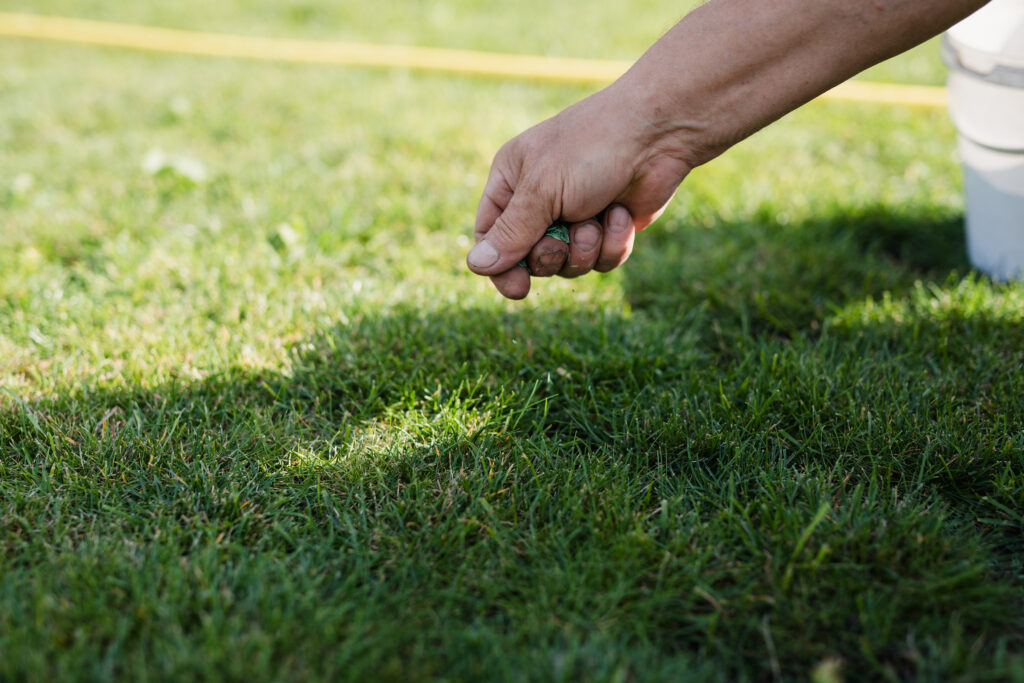
Tall fescue often needs help recovering after an Oklahoma summer. Heat, drought, foot traffic, disease, and inconsistent irrigation can leave the turf thin or bare by early fall.
For most Oklahoma City properties, fall is the best time to aerate and overseed tall fescue. Completing the work during the right window gives new grass time to germinate and develop roots before winter.
The Best Time to Aerate and Overseed Fescue
Tall fescue is a cool-season grass that grows most actively during spring and fall. In Oklahoma City, the primary overseeding window generally runs from late September through mid-October, although weather and property conditions can affect the exact timing.
During this period, soil is usually warm enough for seed germination while cooler air temperatures reduce stress on young grass. Fall also gives the new plants several months to establish before facing Oklahoma’s summer heat.
Seeding too early can expose new grass to lingering heat and greater watering demands. Waiting too long may not give seedlings enough time to develop before freezing temperatures arrive.
Does Every Fescue Lawn Need Aeration?
Aeration is especially helpful when soil compaction is contributing to poor turf performance. Oklahoma City’s clay-heavy soils can become compacted because of foot traffic, mowing equipment, construction activity, and repeated irrigation runoff.
Signs that aeration may be beneficial include:
- Thin turf in heavily traveled areas
- Water pooling or running off the surface
- Soil that feels hard or difficult to penetrate
- Shallow grass roots
- Bare areas that do not respond to normal lawn care
- Weeds spreading through weak turf
Core aeration removes small plugs of soil, creating openings that help air, water, and nutrients reach the root zone. These openings also improve seed-to-soil contact when overseeding follows.
However, aeration will not correct every lawn problem. Turf struggling because of deep shade, disease, poor drainage, or an irrigation issue may continue to decline unless the underlying cause is addressed.
Why Tall Fescue Often Needs Overseeding
Unlike bermudagrass, tall fescue does not spread aggressively into bare areas. When individual plants die during summer, the open spaces usually remain until new seed is introduced.
Overseeding adds new grass plants to thin areas, improving density and appearance. A thicker stand of turf can also leave less open space for weeds.
Before overseeding, evaluate why the lawn became thin. Common causes around Oklahoma City include:
- Summer heat and drought
- Brown patch or other turf diseases
- Uneven sprinkler coverage
- Soil compaction
- Excessive shade
- Mowing too short
- Heavy use or foot traffic
Adding seed without correcting these conditions may produce only temporary improvement.
Prepare Irrigation Before Seeding
New fescue seed needs consistent moisture to germinate. Before aeration and overseeding begin, inspect the irrigation system for broken heads, dry spots, leaks, runoff, and uneven coverage.
Seeded areas generally need frequent, light watering during germination. Once the seedlings become established, watering should gradually shift toward deeper and less frequent applications.
The goal is to keep the seedbed moist without creating standing water, runoff, or constantly saturated soil. An irrigation system that misses part of the lawn can lead to uneven germination and wasted seed.
Avoid Conflicts With Fall Pre-Emergent
Fall pre-emergent products help prevent winter annual weeds, but many can also prevent desirable grass seed from establishing.
If fescue overseeding is planned, coordinate weed-control and seeding schedules before applying a pre-emergent. Applying the wrong product or using it at the wrong time may reduce germination.
This is one reason a property-specific fall plan matters. Areas being overseeded may require a different approach than established turf where no seeding is planned.
Plan Your Fall Turf Renovation Early
Successful aeration and overseeding depend on more than choosing a date. Soil condition, irrigation coverage, shade, disease history, and the extent of summer damage should all influence the plan.
Total Environment can evaluate your Oklahoma City property, identify the causes of thinning turf, and develop an aeration and overseeding plan based on its specific conditions. Planning early helps ensure the work is completed during the most effective fall window.
Contact us today to get started!