
Brown or thinning turf in August is easy to blame on Oklahoma heat. Sometimes heat and drought are the cause. In other cases, insects may be feeding on the grass above or below the soil.
Two pests worth watching in late summer are white grubs and fall armyworms. Both can damage turf, but they affect grass differently. Identifying the actual problem before treating it helps property managers avoid unnecessary applications and focus resources where they are needed.
Signs of White Grub Damage
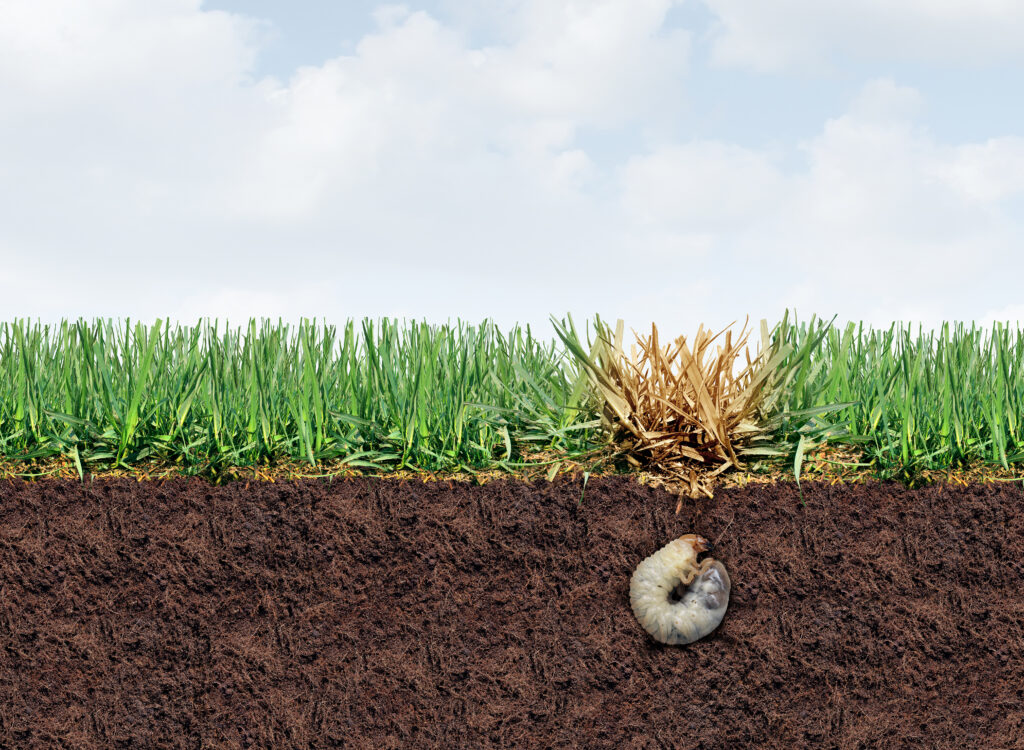
White grubs are the larvae of scarab beetles. They live below the soil surface and feed on turf roots, reducing the grass’s ability to absorb water and remain anchored.
Possible signs of grub activity include:
- Irregular patches of brown or thinning turf
- Grass that feels loose underfoot
- Turf that can be pulled or rolled back because roots have been damaged
- Birds, skunks, raccoons, or other animals digging through the lawn
- C-shaped larvae found beneath affected turf
Grub damage is often most noticeable in late summer or fall. However, brown grass alone does not confirm an infestation. Drought stress, irrigation gaps, compacted soil, disease, and other root problems can create similar symptoms. Severe grub damage is also generally less common in bermudagrass than in some cool-season turf, so the grass type should be considered during diagnosis.
The best way to confirm grubs is to inspect the root zone. A section of affected turf can be carefully lifted to check for larvae and determine whether roots remain firmly attached to the soil.
Signs of Armyworm Damage
Armyworms feed above ground, consuming turf leaves rather than roots. During an outbreak, they can move quickly across lawns and large turf areas.
Early damage may appear as small translucent or “windowpane” sections on grass blades. As larvae grow, the turf may begin to look closely clipped, ragged, thin, or brown. Other warning signs include:
- Rapid damage that seems to appear overnight
- Visible caterpillars moving through the turf
- Chewed or stripped grass blades
- Birds actively feeding across the lawn
- Uneven areas of sudden thinning
Armyworms are often a late-summer or early-fall concern in Oklahoma. Outbreaks do not happen at the same level every year, but lush turf following wet weather can create favorable conditions for egg-laying and larval feeding. Younger larvae are easier to manage, which makes early scouting important on high-visibility commercial properties.
Could the Problem Be Something Else?
Not every brown area is caused by insects. Before assuming grubs or armyworms are responsible, a landscape professional should also evaluate:
Irrigation performance
Broken heads, incorrect pressure, blocked spray patterns, or poorly scheduled zones can leave some areas dry while overwatering others.
Drought stress
Turf experiencing water stress may turn bluish-gray, hold visible footprints, curl its leaves, or develop irregular brown areas.
Turf disease
Warm, humid conditions and extended leaf wetness can contribute to disease, especially in cool-season turf. Adding more water may worsen the problem.
Soil compaction
Compacted Oklahoma clay soil can restrict root growth and prevent irrigation from soaking into the root zone.
Mowing stress
Cutting turf too short or removing too much growth at once can produce a yellow or brown, scalped appearance.
Because these problems often overlap, treating insects without confirming their presence can waste part of the landscape budget while the real cause continues.
Why Routine Scouting Matters on Commercial Properties
Commercial landscapes experience more pressure than many residential lawns. Heat from surrounding pavement, foot traffic, compacted soils, complex irrigation systems, and high appearance expectations can all increase turf stress.
Routine inspections allow a landscape team to identify changes before damage spreads. That may include checking roots, inspecting leaf blades, observing irrigation coverage, monitoring pest activity, and comparing affected areas with surrounding healthy turf.
This proactive approach is especially important for office properties, healthcare campuses, HOAs, multifamily communities, retail centers, and other sites where declining turf affects the property’s overall presentation.
Protect Your Turf Through the End of Summer
Grubs and armyworms can damage turf, but symptoms should always be investigated before treatment begins. The goal is not simply to react to brown grass. It is to determine whether the cause is insects, irrigation, disease, soil conditions, mowing practices, or a combination of several stresses.
Total Environment provides proactive commercial landscape maintenance and plant health care throughout the Oklahoma City metro. If your property develops sudden turf damage, our team can inspect the affected areas, identify likely causes, and recommend a plan that supports both immediate recovery and long-term landscape performance. Contact us today to get started!